Exploring the Power of Cloud Services for Businesses: A Complete Overview

• Nov 24, 2023 • 9 min read

In today’s digital age, cloud services have become an integral part of how businesses store, manage, and access their data. Ranging from on-the-go file storage to hosting entire applications, the cloud provides a wide range of services that have transformed the way we use and engage with technology. Understanding the importance of cloud services is crucial for anyone looking to harness the power of the cloud for personal or professional purposes. Leveraging the right cloud technologies across the available options can be a challenge. However, with the right knowledge and guidance, you can navigate this cloud landscape with confidence and clarity.
In this blog, we will explore the world of cloud services and provide valuable insights to help you make informed decisions about leveraging the cloud for your needs. This blog aims to provide knowledge on how cloud services can be utilised to enhance productivity and efficiency.
What Are Cloud Services?
Cloud services refer to the delivery of computing resources and services over the internet. This involves the provision of virtualised resources, such as servers, storage, networking, and software applications. One of the key advantages of cloud services is that they provide access to computing resources without requiring physical infrastructure or initial investments. Cloud services offer different characteristics as compared to traditional computing models. Firstly, they are typically provided on a pay-per-use basis, allowing users to only pay for the resources they actually use. This enables cost savings and flexibility for businesses, as they can scale their usage up or down depending on their needs.
Secondly, cloud services are often delivered through a shared infrastructure, allowing multiple users to benefit from a single service. Additionally, cloud services are accessible from anywhere with an internet connection, enabling remote access and collaboration. Overall, cloud services offer numerous benefits, such as enhanced scalability, agility, cost savings, and business continuity. Cloud computing is growing in popularity as organisations and individuals are harnessing its power to streamline operations, boost efficiency, and foster innovation.
What Are Cloud Computing Services?
Cloud computing services are a type of internet-based computing that provides users with scalable and flexible access to computing resources. In simple terms, it involves the delivery of computing services, such as storage, databases, software applications, and virtual machines over the internet instead of locally on a physical device. There are several types of cloud computing services available, including public cloud, private cloud, and hybrid cloud. Public cloud services are provided by third-party providers and are accessible to the general public over the internet. Private cloud services are dedicated to a specific organisation and are not shared with other users. Hybrid cloud environments combine elements of both public and private clouds to meet specific business requirements.
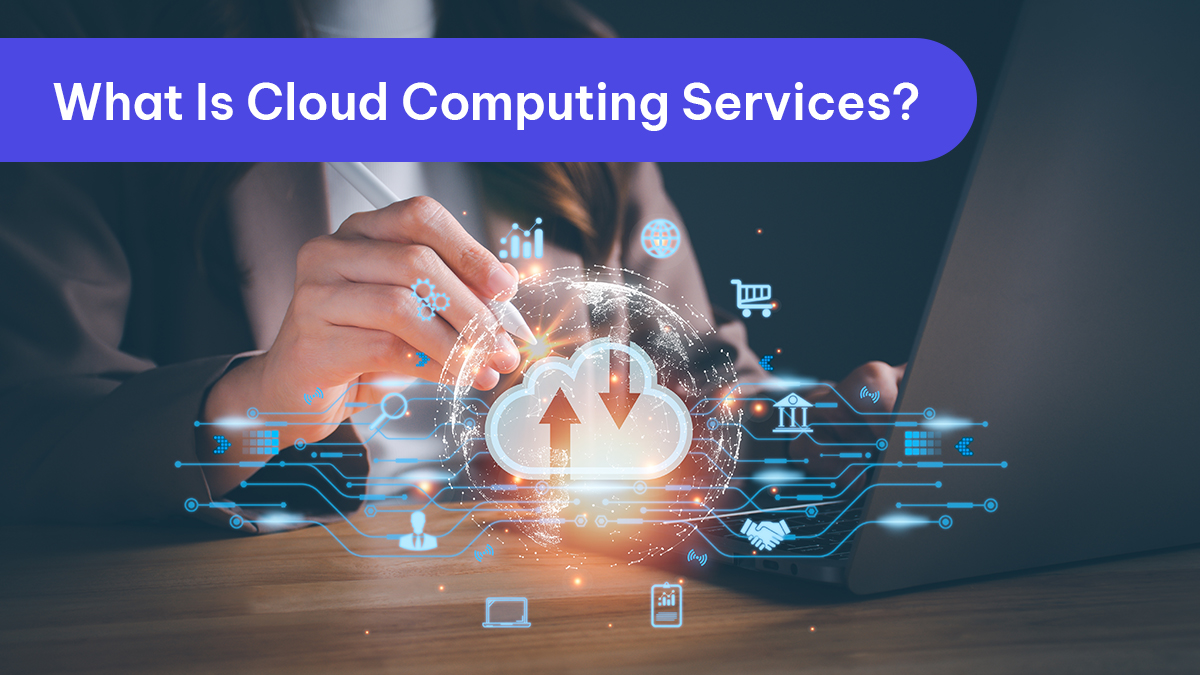
Cloud computing services offer various benefits, including cost savings, scalability, flexibility, and business continuity. Cloud services allow organisations to reduce expenses on physical servers, allowing them to pay only for the utilised resources. Additionally, cloud computing allows businesses to quickly scale up or down their computing resources based on demand.
What Are the Three Main Cloud Computing Service Models?
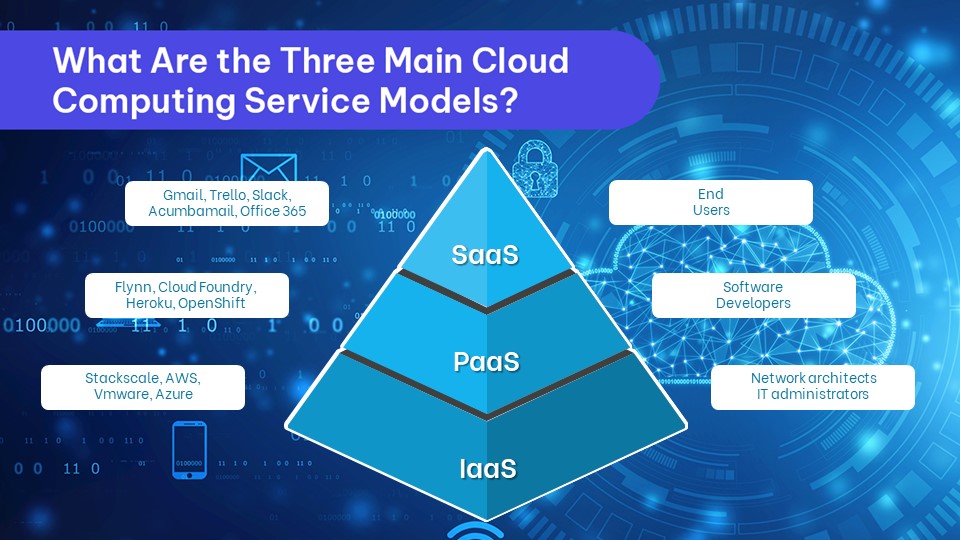
Cloud computing offers a variety of services to cater to different business needs. The main cloud service models are IaaS, PaaS, and SaaS, providing different levels of infrastructure, platform, and software accessibility. These cloud computing service models allow businesses to gain flexibility, scalability, and cost savings.
-
Infrastructure as a Service (IaaS)
IaaS provides users with virtualised resources such as virtual machines, storage, and networks. Businesses can outsource physical infrastructure like servers and data centres and access them via the internet using Azure. With IaaS, organisations have more control over the infrastructure while leaving the maintenance and management to the cloud provider. This model offers flexibility, scalability, and cost savings by eliminating the need for physical hardware.
-
Platform as a Service (PaaS)
PaaS takes the next step by providing a platform on top of the infrastructure. It offers a complete development and deployment environment, including tools and libraries for software development, database management, and application hosting. With PaaS, developers can focus on writing and running applications without worrying about infrastructure management. This model speeds up the development process, simplifies deployment, and reduces costs.
-
Software-as-a-service (SaaS)
SaaS offers ready-to-use software applications that can be used over the internet without the need for installation or maintenance. SaaS providers handle all aspects of application management, including updates and security. This model enables businesses to quickly adopt and use various software applications, enhancing collaboration and productivity.
What Is Microsoft Azure Cloud Service?
Microsoft Azure is a comprehensive cloud computing platform offered by Microsoft. It empowers businesses with flexibility, scalability, and security, boosting operational enhancement and innovation. Leveraging Azure’s features, businesses can optimise IT infrastructure, cut costs, and concentrate on core competencies.
- Azure offers diverse cloud services, facilitating application development, deployment, and management via Microsoft-managed data centres, benefitting businesses.
- Azure offers a variety of features designed to meet specific business needs, including public, private, and hybrid cloud models.
- Azure allows businesses to quickly and easily scale their applications and services up or down based on demand, ensuring optimal performance and cost efficiency.
- Azure supports businesses worldwide by offering a secure cloud infrastructure for global data storage and access.
- Azure also offers a range of cloud services and tools, including virtual machines, storage, and networking capabilities that empower businesses to run applications and services through cloud computing, eliminating the need for on-premises hardware and infrastructure.
What Are the Benefits of Cloud Services?
Cloud services offer multiple benefits that revolutionise the way businesses and individuals use technology. Some of the main benefits are as below.
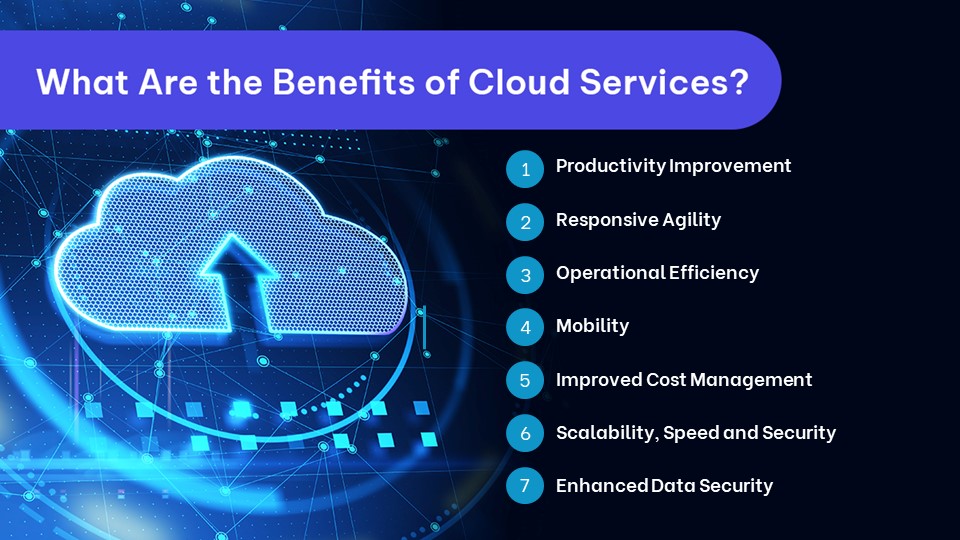
- Enhanced Data Security: By storing data in the cloud, businesses can benefit from advanced security measures, such as encryption, multi-factor authentication, and regular security updates, which can protect sensitive information from unauthorised access.
- Improved Productivity: With the cloud, users can access data and applications from anywhere with an internet connection. This accessibility enables employees to collaborate effectively, work remotely, and access the resources they need to perform their tasks efficiently.
- Agility and Scalability: Cloud services allow businesses to quickly adapt to changing demands and scale their resources up or down as needed. This flexibility empowers organisations to respond to market changes swiftly and efficiently without the need for significant upfront investments in infrastructure.
- Improved Cost Management: Cloud services eliminate the need for large upfront investments in hardware and infrastructure as they offer a pay-as-you-go model. This leads to more predictable and manageable operational costs.
- Enhanced Operational Efficiency: By giving the responsibility of managing hardware and infrastructure to the service provider, the cloud enables businesses to focus on their core activities and strategic initiatives. This increases the overall operational efficiency of an organisation.
- Business Continuity: By providing reliable backup and disaster recovery solutions, cloud services enable businesses to quickly recover their data and applications, minimising downtime and ensuring uninterrupted operations.
What Are Cloud Managed Services?
Cloud managed services involve outsourcing IT tasks to specialised third-party managed service providers (MSPs) with cloud technology expertise. These services aim to reduce the burden on businesses by allowing them to focus on their core business operations. Organisations benefit from MSP (Managed Service Provider) expertise in managing cloud environments, ensuring peak performance, security, and scalability.
Additionally, cloud managed services provide businesses with access to advanced tools, technologies, and resources that they may not have in-house. This includes 24*7 monitoring and support, data backup and disaster recovery, the latest security measures, and continuous system updates and patches. By outsourcing cloud management to a third-party provider, businesses can avoid significant upfront investments in hardware and software.
How to Choose a Cloud Service Provider?
Selecting a cloud service provider requires consideration of various factors to align with your business requirements effectively.
- Firstly, evaluate the provider’s experience and reputation in the industry. Look for a provider with a proven track record and a strong customer base.
- Consider the range of services and solutions that the provider offers. Assess whether their offerings align with your specific requirements, whether it’s public, private, or hybrid cloud solutions, as well as the availability of essential services such as virtual machines or cloud-based software.
- Choose providers that can guarantee high levels of uptime and have strict security measures in place. This is important for protecting sensitive data and ensuring business continuity.
- Evaluate the provider’s pricing structure and assess whether it aligns with your budget and cost-saving expectations. Additionally, look for providers that offer scalability and the ability to customise services as your business needs evolve.
- The most important thing is the provider’s level of customer support and the quality of their service-level agreements. Choose a provider that offers 24/7 support and has a reputation for responsive and helpful customer service.
Why Choose Exigo Tech for Cloud Services?
Partnering with Exigo Tech for cloud services brings several advantages as we offer a comprehensive range of cloud services for businesses across various industries. With cloud services by Exigo Tech, you can tap into the benefits of cloud computing, enhance performance, and achieve cost savings.
- We ensure a smooth cloud journey for our clients, empowering them with the latest technology and enabling them to stay ahead in today’s competitive business landscape.
- With our expertise in cloud computing, we aim to help our clients unlock the full potential of the cloud and leverage its benefits for their business operations.
- We offer diverse cloud service models: public, private, and hybrid, enabling you to select the ideal fit for your distinct requirements. Our cloud infrastructure is highly secure and reliable, ensuring the safety and accessibility of your data and applications.
- We also offer the advantages of business continuity and remote access to your resources, enabling seamless collaboration and uninterrupted operations.
Start your cloud journey today with Exigo Tech. Get in touch with us at sales@exigotech.com.au or call 1300 EXIGOTECH (394 468) to embrace the world of cloud.
Table of Contents
- What Are Cloud Services?
- What Are Cloud Computing Services?
- What Are the Three Main Cloud Computing Service Models?
- What Is Microsoft Azure Cloud Service?
- What Are the Benefits of Cloud Services?
- What Are Cloud Managed Services?
- How to Choose a Cloud Service Provider?
- Why Choose Exigo Tech for Cloud Services?
Tags
Related Articles

How to Secure Microsoft Copilot Agents with Microsoft 365 E5

Cloud Cost Optimisation: How Businesses Can Reduce Azure Spending Without Slowing Growth

Azure Backup vs Traditional Backup: Which Is Right for Businesses?

Let's Talk About Your IT Challenges
Book a free consultation with our experts today. We'll analyze your current infrastructure and provide actionable recommendations.