Cloud Transformation Consulting: A Practical Guide for Your Business
 Niten Devalia
Chief Sales Officer / Co-founder • Jan 16, 2026 • 5 min read
Cloud transformation consulting is now essential for businesses that want to modernise IT systems, improve performance, and stay competitive. Australian organisations are projected to spend nearly A$26.6 billion on public cloud services in 2026, marking an 18.9% increase from 2024. This trend shows strong growth in cloud adoption across industries and highlights the need for structured consulting support to manage costs, compliance, and migration risks.
Industry analysts also show that the Australian cloud computing market is growing rapidly, with values expected to reach USD 150.97 billion by 2033. This growth reflects increased demand for cloud-enabled digital transformation and reflects why strategic consulting is vital for enterprise success.
For B2B organisations, cloud transformation consulting delivers a clear plan to migrate systems and data with minimal disruption. It aligns cloud adoption with business goals, reduces risk, and ensures stronger outcomes. This guide explains how cloud transformation consulting works, why it matters for Australian enterprises, and how organisations can plan a clear path forward.

How to Secure Microsoft Copilot Agents with Microsoft 365 E5
What Is Cloud Transformation Consulting?
Cloud transformation consulting is a structured service that helps organisations adopt cloud technology in a planned way. It supports the move of applications, data, and business processes to cloud platforms. It covers cloud strategy, architecture design, migration planning, security controls, and continuous improvement.
A consulting-led approach ensures:
- Clear business and technology goals.
- Controlled and phased cloud migration.
- Reduced operational and security risk.
- Measurable outcomes linked to business value.
Cloud transformation consulting aligns cloud technology with business requirements. It helps organisations avoid unplanned spending, unmanaged environments, and fragmented systems.
Why Cloud Transformation Consulting Matters for Australian B2B Organisations
Australian B2B organisations operate under strict regulatory requirements and increasing IT cost pressure. Cloud transformation consulting helps businesses manage these challenges through a structured and compliant cloud adoption approach.
Key drivers include:
- Support for hybrid and multi-cloud environments.
- Compliance with Australian data residency and regulatory standards.
- Faster delivery of digital and customer-facing services.
- Improved disaster recovery, availability, and system uptime.
For B2B organisations, cloud transformation consulting enables growth while reducing reliance on large upfront infrastructure investment. It provides a scalable foundation that supports long-term business and operational goals.
Key Areas Covered by Cloud Transformation Consulting
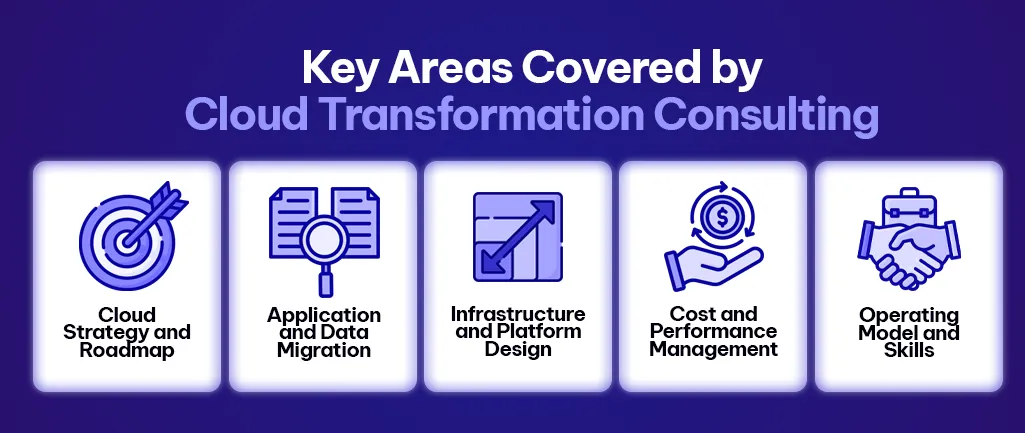
Cloud Strategy and Roadmap
Consultants define the cloud vision, scope, and success criteria. They set clear timelines and priorities. They map workloads to public, private, or hybrid cloud based on business and compliance needs.
Application and Data Migration
Teams review existing applications and data platforms. They decide the right approach for each workload, such as re-hosting, re-platforming, or re-architecting. This reduces migration risk and limits disruption.
Infrastructure and Platform Design
Consultants design scalable and secure cloud environments. They use standard architecture patterns and automation to improve consistency, availability, and performance.
Cost and Performance Management
Cloud transformation consulting includes cost visibility and usage controls. It helps organisations track spend, remove unused resources, and improve performance across environments.
Operating Model and Skills
Consultants align teams, roles, and tools with cloud operations. They support DevOps practices, platform ownership, and ongoing support models.
Cloud Transformation Consulting Models
Advisory-Led Model
This model focuses on strategy, architecture, and governance. Internal teams manage implementation and day-to-day delivery.
Co-delivery Model
Consultants work alongside in-house teams. Delivery and knowledge transfer happen together to build internal capability.
End-to-end Delivery
The consulting partner manages strategy, implementation, and transition to operations. This model suits organisations with limited internal cloud capacity.
Each cloud transformation consulting model supports different levels of cloud maturity and internal capability.

Agentic AI for Operations Leaders: Turning AI into Action
Security, Compliance, and Data Residency in Australia
Cloud transformation consulting must address Australian security and regulatory requirements from the start. Australian organisations manage sensitive data and must meet industry and government compliance standards.
Core focus areas include:
- Data residency within Australian cloud regions.
- Alignment with ISO 27001 and the ASD Essential Eight.
- Strong identity and access control across systems.
- Audit logging and monitoring for compliance and review.
A structured cloud transformation consulting approach embeds security into design, migration, and operations. This reduces risk and supports long-term compliance.
Cloud Transformation Consulting Checklist
Use this checklist to assess cloud readiness before starting a transformation program:
- Clear business objectives defined.
- Application inventory completed.
- Data classification completed.
- Cloud cost model approved.
- Security controls designed.
- Disaster recovery tested.
- Skills and support model agreed.
This cloud transformation consulting checklist reduces delivery risk and improves execution speed.

Microsoft 365 Security for Healthcare Providers: Protecting Patient Data and Business Operations
Common Challenges and How Consulting Helps
Legacy System Constraints
Many organisations rely on older systems that were not built for cloud platforms. Consultants assess technical risk and define safe migration paths that reduce downtime and integration issues.
Cost Overruns
Unplanned cloud usage can increase spend. Cloud transformation consulting applies cost controls, budgets, and usage monitoring to manage expenses.
Skill Gaps
Cloud platforms require new skills and operating practices. Consultants support teams during delivery and help build internal capability.
Governance Gaps
Lack of ownership and standards creates inconsistency. Consulting establishes clear governance, roles, and operational guidelines across cloud environments.
Why Choose Exigo Tech for Cloud Transformation Consulting
Exigo Tech provides cloud transformation consulting for Australian B2B organisations. The focus stays on clear outcomes, regulatory alignment, and long-term business value.
Exigo Tech supports:
- Microsoft and hybrid cloud platforms.
- Secure and scalable enterprise architectures.
- Data and application modernisation programs.
- Continuous optimisation and operational support.
Our approach always remains practical, outcome-driven, and aligned with business priorities.

Table of Contents
Tags
Related Articles

How to Secure Microsoft Copilot Agents with Microsoft 365 E5

Cloud Cost Optimisation: How Businesses Can Reduce Azure Spending Without Slowing Growth
Azure Backup vs Traditional Backup: Which Is Right for Businesses?

Let's Talk About Your IT Challenges
Book a free consultation with our experts today. We'll analyze your current infrastructure and provide actionable recommendations.