- Technologies
- Dynamics 365 Business Central Workshop
- Dynamics 365 Supply Chain Management Workshop
- Dynamics 365 Finance Readiness Assessment
- Dynamics 365
- Customer Data Platform
- Dynamics 365 Sales
- Dynamics 365 Service
- Dynamics 365 Marketing
- Dynamics 365 Supply Chain Management
- Dynamics 365 Business Central
- Dynamics 365 Finance
- Dynamics 365 Project Management
- Modern Application Development
- Dynamics 365 for Sales Workshop
- Innovation
- Contact us
Cybersecurity Essentials: 6 Common Cyberattacks and How to Prevent Them Effectively
 Niten Devalia
Chief Sales Officer / Co-founder • Dec 2, 2024 • 9 min read
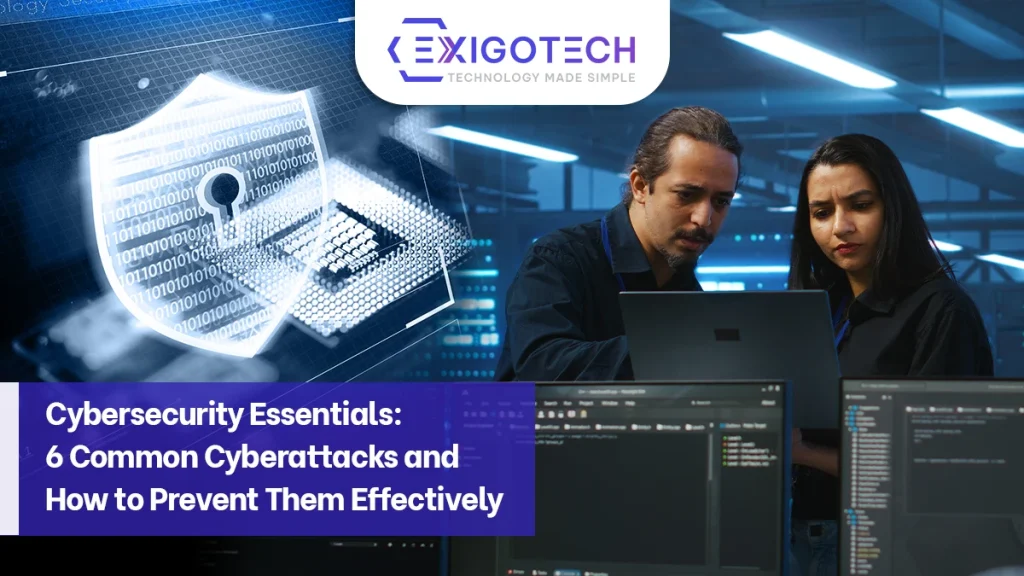
Cyberattacks are happening every 39 seconds worldwide and you could be the next target. With the rise of digital reliance, acting on cybersecurity today is not just wise; it’s imperative. The increasing reliance on digital platforms has made businesses more vulnerable to cyber threats. Cybercriminals are constantly evolving their tactics, targeting financial data, personal information, and even critical infrastructure.
This blog will walk you through the types of cyberattacks you need to be aware of, the methods used by attackers, and practical strategies to safeguard your digital assets. Whether you are a small or medium business owner or a large enterprise, staying informed is the first step to staying secure.
The Landscape of Cyber Threats
Cybercrime has reached unprecedented levels, with the global economy losing trillions of dollars annually to malicious activities, with damages predicted to reach $10.5 trillion annually by 2025. In Australia, cybercrime reports have surged, with more than 94,000 incidents logged annually, impacting businesses, individuals, and critical sectors like healthcare and finance.
One of the most devastating forms of attack, ransomware, is predicted to cost organisations $265 billion (USD) annually by 2031. From phishing scams impersonating trusted institutions to sophisticated malware networks, the methods used by cybercriminals are becoming harder to detect and prevent.
The time to act is now – because cybercriminals aren’t slowing down.
6 Common Types of Cyberattacks
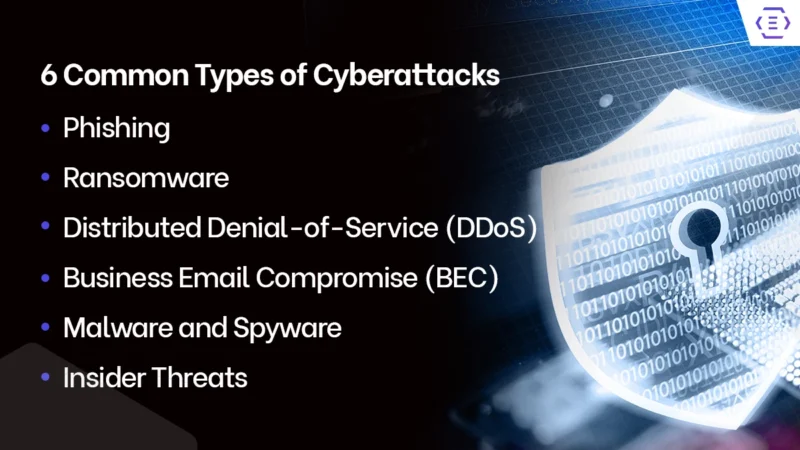
Cybercriminals employ various tactics to exploit vulnerabilities, with these being some of the most frequent and damaging attacks faced by businesses:
1. Phishing: The Most Common Cyberattack
Phishing remains one of the most damaging tactics used by cybercriminals. These attacks rely on social engineering, where deceptive emails, text messages, or calls impersonate trusted organisations like banks, government institutions, etc. The goal is to trick individuals into revealing sensitive information, such as passwords, credit card details, or personal identifiers.
- Why Phishing Attacks are Dangerous:
Phishing scams not only lead to financial losses but can also expose victims to identity theft or deeper network breaches in organisations. A single click can compromise entire systems.
2. Ransomware: Holding Data Hostage
Ransomware is one of the most disruptive forms of cyberattack, where malicious software encrypts a victim’s data and demands a ransom for its release. These attacks cause significant financial and operational damage to businesses. Industries like healthcare, finance, and education are frequently hit, as their reliance on sensitive data makes them prime targets.
- Why It’s Dangerous:
Paying the ransom doesn’t guarantee recovery. In many cases, criminals either refuse to restore access or strike again. The loss of data, combined with reputational damage, can badly affect.
3. Distributed Denial-of-Service (DDoS) Attacks: Overwhelming Systems
Distributed Denial-of-Service (DDoS) attacks overwhelm a network, server, or website with excessive traffic, rendering it inaccessible to legitimate users. These attacks disrupt operations, leading to significant financial losses and reputational harm. Industries such as online retail, gaming platforms, and financial institutions are prime targets, especially during peak business periods.
- Why It’s Dangerous:
DDoS attacks can halt business operations for hours or even days, affecting customer trust and revenue. Additionally, they are sometimes used as a smokescreen to conceal more severe breaches.
4. Business Email Compromise (BEC): A Costly Deception
Business Email Compromise (BEC) scams are a sophisticated form of cyberattack where fraudsters impersonate executives, vendors, or trusted partners. Their goal? To trick businesses into transferring funds or sharing sensitive information. These scams often rely on social engineering, exploiting trust and urgency to bypass traditional security measures.
- Why It’s Dangerous:
BEC attacks are highly targeted, making them harder to detect. They can result in substantial financial losses, data breaches, and even regulatory penalties for mishandling sensitive information.
5. Malware and Spyware: Silent Threats to Your Security
Malware attacks systems through infected downloads, compromised websites, or deceptive email attachments. Once inside, it can steal sensitive data, corrupt files, or disrupt operations. Spyware, a specific type of malware collects personal or financial information without the victim’s knowledge.
- Why It’s Dangerous:
Malware and spyware can lead to identity theft, financial fraud, and even long-term reputational damage for businesses. The covert nature of spyware makes it particularly difficult to detect, often allowing it to collect information over extended periods.
6. Insider Threats: The Danger Within
Insider threats pose a unique cybersecurity challenge, arising from employees, contractors, or business partners who have legitimate access to systems. These threats can be intentional, such as data theft or sabotage, or accidental, caused by negligence or lack of awareness. Insider threats are often overlooked but account for a significant portion of data breaches.
- Why It’s Dangerous:
Insiders already have access to sensitive information, making their actions harder to detect. Weak internal policies and insufficient monitoring can amplify the risks, resulting in data leaks, financial losses, and compliance issues.

Be Secure, Be Aware, Be Agile
Protect your business from cyberattacks with our Managed Security as a Service offering.
Methods Used by Cybercriminals to Attack
Cybercriminals use a variety of sophisticated techniques to breach systems, steal data, and disrupt operations. Understanding their tactics is the first step in defending against them. Here are the most common methods employed by attackers:
-
Social Engineering: Exploiting Human Vulnerabilities
Social engineering involves manipulating individuals into revealing sensitive information or granting access to systems. Cybercriminals often use deception, urgency, or trust to trick their targets.
-
Exploiting Software Vulnerabilities: The Backdoor Entry
Outdated or unpatched software is a common target for cybercriminals. By exploiting known vulnerabilities, attackers can infiltrate systems without requiring user interaction.
-
Credential Stuffing: The Power of Stolen Passwords
Credential stuffing involves using previously stolen usernames and passwords to gain unauthorised access to accounts. This method is especially effective when people use the same passwords across multiple platforms.
-
Advanced Persistent Threats (APTs): The Silent Intruders
APTs are long-term, targeted attacks aimed at high-value organisations or critical infrastructure. These attacks often involve a combination of methods, including malware, phishing, and exploiting vulnerabilities.
Top 6 Strategies to Prevent Cyberattacks
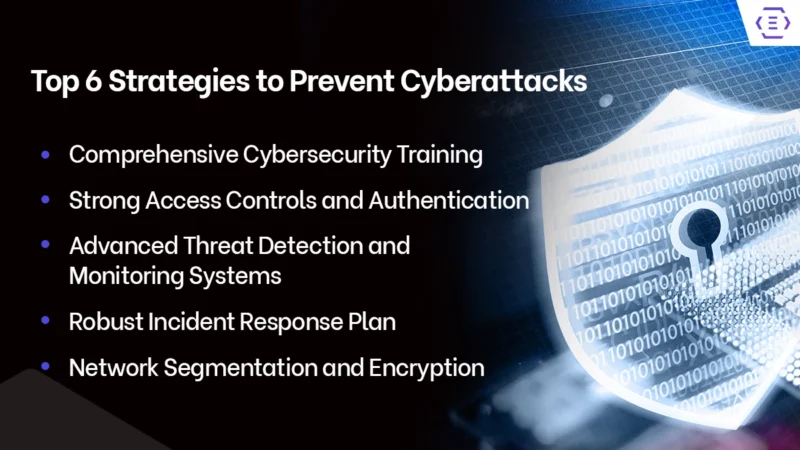
Protecting against cyberattacks requires a proactive approach, tailored to the unique needs of businesses. Here’s how businesses can create a robust defence.
Invest in Comprehensive Cybersecurity Training
Educating employees is the first line of defence. Regularly conduct training programs to help staff recognise phishing attempts, social engineering tactics, and other threats. This ensures they can act as vigilant gatekeepers for your organisation’s digital assets.
Tip: Simulate phishing campaigns to test and enhance employee awareness.
Implement Strong Access Controls and Authentication
Limit access to sensitive systems and data based on roles and responsibilities. Use multi-factor authentication (MFA) to ensure only authorised users can access critical systems.
Tip: Periodically review and update access privileges to reflect personnel changes.
Maintain Regular Software Updates and Patch Management
Cybercriminals often exploit outdated software to gain access to systems. Ensure that all operating systems, applications, and devices are updated with the latest security patches.
Tip: Automate updates wherever possible to minimise human oversight.
Deploy Advanced Threat Detection and Monitoring Systems
Use intrusion detection systems (IDS), firewalls, and endpoint protection tools to monitor and respond to threats in real time. Consider employing artificial intelligence-based solutions for proactive threat hunting.
Tip: Partner with a managed security service provider to enhance your threat detection capabilities.
Develop a Robust Incident Response Plan
Be prepared for the worst-case scenario with a detailed incident response plan. Define the steps to identify, contain, and recover from cyberattacks. Regularly test and update the plan to ensure its effectiveness.
Tip: Include communication protocols to inform stakeholders and regulators promptly in case of a breach.
Secure Your Network with Segmentation and Encryption
Segment your network to limit the spread of potential breaches and encrypt sensitive data both in transit and at rest. This ensures that even if attackers gain access, the damage is minimised.
Tip: Use Virtual Private Networks (VPNs) for remote access and web-based communications.
Managed Security as a Service: A Powerful Solution by Exigo Tech
Exigo Tech offers Managed Security as a Service (MSaaS) offering, powered by leading technologies from Microsoft and eSentire. It provides businesses with 24/7 protection and peace of mind. This service is designed to ensure your organisation stays ahead of threats while allowing you to focus on what matters most—your business growth.
How Exigo Tech’s MSaaS Works
At the core of Exigo Tech’s MSaaS is a seamless integration of Microsoft’s advanced security tools and eSentire’s Managed Detection and Response (MDR) capabilities. Together, they deliver real-time monitoring, threat detection, and rapid response to secure your organisation from every angle. Whether it’s safeguarding endpoints, networks, or cloud environments, Exigo Tech’s solution is tailored to meet your business needs.
Why Choose Exigo Tech for Your Cybersecurity Needs?
Exigo Tech’s Managed Security as a Service stands out for its advanced capabilities and holistic approach to cybersecurity:
- Proactive Threat Detection: Leverages Microsoft’s AI-driven tools and eSentire’s 24/7 monitoring to identify and respond to threats in real-time.
- Tailored Protection: Customised solutions designed to secure your organisation’s unique infrastructure, including hybrid and cloud environments.
- Expert Oversight: Cybersecurity professionals provide continuous monitoring, analysis, and incident resolution.
- End-to-End Coverage: Secures your endpoints, networks, and cloud systems seamlessly.
- Incident Response Plans: Robust strategies to handle potential breaches swiftly and minimise operational downtime.
With Exigo Tech’s MSaaS, you can focus on innovation and growth while leaving cybersecurity to our trusted professionals. This level of comprehensive protection is no longer optional in today’s digital world – it’s essential.
Contact us at contact@exigotech.com.au or call us at 1300 EXIGOTECH (394 468) to build a secure, resilient future for your digital operations.

Don’t Wait for A Breach to Happen
Start implementing effective cybersecurity strategies today and protect your business.
Table of Contents
Tags
Related Articles
Microsoft 365 Security for Healthcare Providers: Protecting Patient Data and Business Operations
Endpoint Security for SMBs: Protecting Devices, Users and Business Data
Compliance and Cybersecurity Challenges Facing Australian Local Governments

Let's Talk About Your IT Challenges
Book a free consultation with our experts today. We'll analyze your current infrastructure and provide actionable recommendations.