
- Technologies
- Dynamics 365 Business Central Workshop
- Dynamics 365 Supply Chain Management Workshop
- Dynamics 365 Finance Readiness Assessment
- Dynamics 365
- Customer Data Platform
- Dynamics 365 Sales
- Dynamics 365 Service
- Dynamics 365 Marketing
- Dynamics 365 Supply Chain Management
- Dynamics 365 Business Central
- Dynamics 365 Finance
- Dynamics 365 Project Management
- Modern Application Development
- Dynamics 365 for Sales Workshop
- Innovation
- Contact us
Power Apps vs Power Automate: Choosing the Right Tool for Process Automation
 Vinay Joshi
Head of Sales • May 27, 2026 • 5 min read

Many organisations want to improve efficiency, reduce manual work, and automate repetitive processes. But when exploring Microsoft’s Power Platform, one common question quickly comes up:
Should we use Power Apps or Power Automate?
While both platforms are designed to improve business processes, they solve different problems.
Choosing the wrong tool can lead to:
- Overcomplicated workflows
- Poor user experience
- Unnecessary development effort
- Limited scalability
Understanding the difference between Power Apps and Power Automate is essential for building the right automation strategy.
At Exigo Tech, we help organisations design intelligent business solutions as your Managed Intelligence Partner, ensuring Power Platform tools are used strategically and effectively.
Understanding the Microsoft Power Platform
Microsoft Power Platform includes several tools designed to help organisations build applications, automate workflows, analyse data, and improve productivity.
Two of the most widely used components are:
- Power Apps: for building business applications
- Power Automate: for automating workflows and processes
Although they often work together, they are not interchangeable.

How to Secure Microsoft Copilot Agents with Microsoft 365 E5
What Is Power Apps?
Power Apps is a low-code application development platform.
It allows organisations to create custom business applications without traditional software development complexity.
These applications can:
- Collect data
- Display information
- Manage workflows
- Interact with users
- Connect with Microsoft 365, Dynamics 365, SharePoint, SQL, and other systems
Power Apps is best used when users need a structured interface to interact with data or complete tasks.
Common Use Cases for Power Apps
Power Apps is ideal for scenarios such as:
- Field inspection applications
- Asset management systems
- Leave request portals
- Inventory tracking apps
- Service request platforms
- Approval management dashboards
In short: If users need an application interface, Power Apps is usually the right choice.
What Is Power Automate?
Power Automate focuses on workflow automation.
Instead of building applications, it automates tasks and processes between systems.
Power Automate can:
- Trigger actions automatically
- Move data between platforms
- Send notifications and approvals
- Automate repetitive tasks
- Integrate cloud services and applications
The goal is to reduce manual effort and improve process efficiency.

Common Use Cases for Power Automate
Power Automate is commonly used for:
- Approval workflows
- Email notifications
- Document routing
- Automated file handling
- Data synchronisation between systems
- Scheduled reporting processes
In simple terms:
If a process needs automation behind the scenes, Power Automate is usually the better option.

Agentic AI for Operations Leaders: Turning AI into Action
The Core Difference Between Power Apps and Power Automate
The easiest way to understand the difference is this:
| Power Apps | Power Automate |
| Builds user-facing applications | Automates workflows and tasks |
| Focused on interaction | Focused on process execution |
| Used when users need interfaces | Used when systems need automation |
| Replaces spreadsheets or manual apps | Replaces repetitive manual processes |
They solve different parts of the same operational challenge.
When Power Apps Is the Better Choice
Power Apps is the right solution when:
-
Users Need a Custom Interface
If employees need forms, dashboards, or mobile-friendly applications.
-
Processes Require Data Input
When users actively interact with information.
-
Existing Systems Don’t Meet Business Needs
Power Apps can fill operational gaps quickly.
-
Mobility Is Important
Power Apps works well for field teams and mobile workers.
-
Real-Time Data Visibility Is Needed
Applications provide live access to operational data.
When Power Automate Is the Better Choice
Power Automate is ideal when:
-
Tasks Are Repetitive
Processes follow predictable rules.
-
Manual Steps Cause Delays
Automation speeds up approvals and communication.
-
Multiple Systems Need Integration
Workflows can connect platforms automatically.
-
Notifications and Escalations Are Needed
Automated alerts improve responsiveness.
-
Background Processes Need Streamlining
Processes run automatically without user involvement.
Why Many Organisations Actually Need Both
Power Apps and Power Automate are often most powerful when used together.
For example:
- A Power Apps inspection form captures site data
- Power Automate sends approval notifications
- Another workflow updates SharePoint or Dynamics 365
- Reports are automatically generated and distributed
Power Apps handles the user interaction.
Power Automate handles the workflow automation.
Together, they create end-to-end digital processes.
Common Mistakes Organisations Make
Many organisations struggle because they:
- Use Power Apps for workflows that should be automated
- Build overly complex Power Automate flows
- Develop solutions without governance
- Allow uncontrolled app and workflow growth
- Ignore scalability and security considerations
Without structure, Power Platform environments can become fragmented and difficult to manage.
Governance Matters in Power Platform Environments
As Power Platform adoption grows, governance becomes critical.
Organisations need:
- Standardised development practices
- Security and access controls
- Environment management
- Monitoring and lifecycle management
- Integration oversight
Without governance, automation initiatives can create operational and security challenges.
Benefits of Choosing the Right Automation Tool
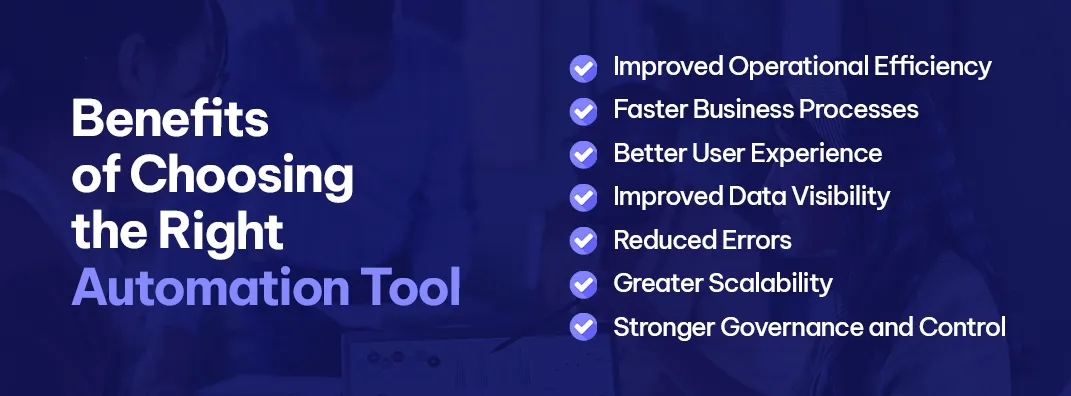
When Power Apps and Power Automate are used strategically, organisations gain:
-
Improved Operational Efficiency
Reduce repetitive manual tasks.
-
Faster Business Processes
Automated workflows speed up approvals and communication.
-
Better User Experience
Custom applications simplify day-to-day work.
-
Improved Data Visibility
Real-time information supports better decision-making.
-
Reduced Errors
Automation reduces manual data entry mistakes.
-
Greater Scalability
Processes can evolve alongside business growth.
-
Stronger Governance and Control
Structured environments remain secure and manageable.

Microsoft 365 Security for Healthcare Providers: Protecting Patient Data and Business Operations
Why Choose Exigo Tech as Your Managed Intelligence Partner
At Exigo Tech, we help organisations design intelligent Power Platform solutions that align with operational goals.
As your Managed Intelligence Partner, we:
- Identify the right use cases for Power Apps and Power Automate
- Design scalable automation strategies
- Implement governance and security controls
- Integrate solutions across Microsoft environments
- Optimise workflows for long-term efficiency
We ensure automation delivers measurable business value, not unnecessary complexity.
Choosing the Right Tool Starts with the Right Strategy
Power Apps and Power Automate are not competing tools. They are complementary technologies designed to solve different business challenges.
The key is understanding:
- When users need applications
- When processes need automation
- When both should work together
With the right strategy, organisations can build efficient, scalable, and intelligent workflows that improve productivity across the business.
Table of Contents
Tags
Related Articles

Power Automate Consulting in Australia: A Guide to Smarter Business Automation
Building Timesheet & Employee Onboarding Apps with Power Apps: Accelerating Digital Transformation

Power Platform Consulting: A Guide to Power Apps, Power Automate, and Power BI Implementation

Let's Talk About Your IT Challenges
Book a free consultation with our experts today. We'll analyze your current infrastructure and provide actionable recommendations.