🇦🇺 Australia
- Technologies
- Dynamics 365 Business Central Workshop
- Dynamics 365 Supply Chain Management Workshop
- Dynamics 365 Finance Readiness Assessment
- Dynamics 365
- Customer Data Platform
- Dynamics 365 Sales
- Dynamics 365 Service
- Dynamics 365 Marketing
- Dynamics 365 Supply Chain Management
- Dynamics 365 Business Central
- Dynamics 365 Finance
- Dynamics 365 Project Management
- Modern Application Development
- Dynamics 365 for Sales Workshop
- Innovation
- Contact us
AI Risk & Compliance Assessment That Shows Where Your AI Stands Against Today's Rules
Understand which AI systems your organisation uses, where the greatest risks sit, and which controls need attention through an assessment aligned to ISO/IEC 42001, ISO/IEC 42005, NIST AI RMF, and applicable privacy requirements.
1 Register Covering
Every Identified AI System, Owner & Risk Tier

3 Reference Frameworks
ISO/IEC 42001, ISO/IEC 42005 and the NIST AI RMF

4 Risk Dimensions Reviewed
People, Data, Operations & Reputation

Action Before Someone Else Asks
AI risk becomes difficult to manage when organisations cannot answer basic questions: Which AI systems are in use? Who owns them? What information do they process? Which ones influence decisions about employees or customers? And what happens if something goes wrong? Exigo Tech's AI Risk & Compliance Assessment creates that visibility.

 Microsoft Partner

Full AI Visibility
See every AI system in use, including the ones nobody formally approved.
Risk Ranked by Real Impact
Focus effort on systems that affect customers, staff or money, not on every chatbot equally.
Clear Obligations by Market
Understand which rules apply where you operate, and which are still proposals.
Evidence You Can Show
Registers, impact records and control mappings ready for boards, auditors and client questionnaires.
A Practical Fix Plan
Gaps ranked by risk and effort, each with an owner and a realistic next step.
Core Offerings: AI Risk & Compliance Assessment Services
Each component turns uncertainty about AI risk into a documented position, helping leadership understand what exists, what matters most, and what needs to happen next.
AI Inventory & Use Case Register
›
Risk Tiering & Impact Assessment
›
Regulatory & Standards Mapping
›
Control Gap Assessment
›
Remediation Roadmap & Board Report
›
We find the AI already in use across Microsoft 365, line-of-business apps, vendor tools and custom builds, then record each system's purpose, owner, data sources and the decisions it influences. Unapproved or forgotten tools are added too, so nothing sits outside the review.

Each system is rated by how much it could affect people, money or reputation. High-impact uses get an impact assessment guided by ISO/IEC 42005, covering fairness, privacy, safety, transparency and human oversight for the people affected.

We map your AI use to the obligations that apply in your markets, such as Australia's Privacy Act, the EU AI Act where you serve EU customers, and local privacy laws across Asia. Each obligation is marked as in force, upcoming or proposed.

We test policies and technical controls against ISO/IEC 42001 and the NIST AI RMF, using Microsoft Purview Compliance Manager AI assessment templates to track gaps and evidence.

You receive a plain-language board summary, a ranked remediation plan with owners, and updated records for your risk register, ready to brief executives and auditors.

Talk to Our Experts


Business Outcomes Enabled

Fewer Surprises
Risky AI uses are found and handled before a client, auditor or regulator raises them.
Faster Client Approvals
Ready answers to AI questions in security questionnaires and tenders shorten sales and renewal cycles.
Confident Board Reporting
Directors see where AI risk sits and what is being done about it.
Focused Compliance Spend
Effort goes to high-impact systems instead of being spread evenly across low-risk tools.
A Head Start on New Rules
When obligations change, your register and mappings make updates quick.
Ready to Know Where Your AI Risk Really Sits?
Replace uncertainty with a clear register, a ranked gap list and a plan your board can back. We'll help you meet today's obligations and be ready for the ones on the way.
Partner Ecosystem
STORIES OF IMPACT
CASE STUDY



LATEST THINKING
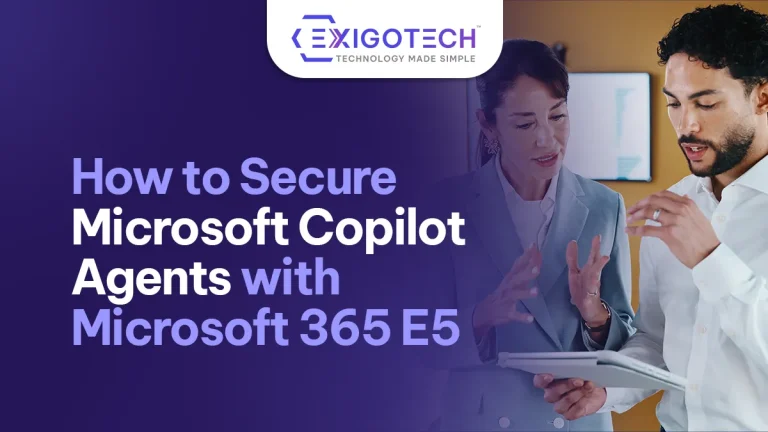
How to Secure Microsoft Copilot Agents with Microsoft 365 E5
Microsoft Copilot agents are becoming an important part of enterprise AI adoption. They can retrieve information,…
Learn more
Agentic AI for Operations Leaders: Turning AI into Action
Traditional automation follows predefined rules. Generative AI creates content or provides insights. Agentic AI can go…
Learn more
Microsoft 365 Security for Healthcare Providers: Protecting Patient Data and Business Operations
Healthcare providers rely on digital systems for almost every part of their operations. Patient records, clinical…
Learn more
When Should You Use Agent Builder Instead of Copilot Studio?
Within Microsoft’s AI ecosystem, businesses have multiple ways to create AI agents. Two important options are…
Learn moreAn AI risk assessment identifies the AI systems your organisation uses, rates how much harm each could cause to people, money or reputation, and checks whether the right controls are in place. A good one ends with a register, a ranked gap list and a remediation plan, giving boards, auditors and clients real evidence.
A risk assessment looks at the organisation: what could go wrong, how likely it is and what it would cost. An impact assessment looks outward at the people affected by a specific system, such as customers or staff. ISO/IEC 42005 gives guidance on impact assessments, and we use both together for high-impact uses.
We use ISO/IEC 42001 for the AI management system, ISO/IEC 42005 for impact assessment and the NIST AI Risk Management Framework for risk language. We then add the laws and guidance that apply in your markets. Alignment helps you prepare for certification if you choose it, but certification is issued by an accredited body, not by us.
It can, even if you are based outside Europe, when your AI systems or their outputs are used in the EU. Transparency duties, such as telling people they are talking to AI, have applied since 2 August 2026. Most high-risk obligations now start on 2 December 2027. We help you check exposure, and flag where legal advice is needed.
This assessment answers whether your AI use is responsible and compliant: which systems carry risk, what obligations apply and where controls fall short. An AI security audit tests deployed systems against attacks such as prompt injection. Our AI governance service then puts policies and guardrails in place. Many organisations start here and move into governance.
No. We are technology and risk specialists, not a law firm. We map your AI use to published laws, standards and regulator guidance, and identify where obligations are likely to apply. Where an interpretation could materially affect you, we flag it clearly so your legal team or external counsel can confirm it before you act.
Yes. We work with organisations across Australia, including Sydney, Melbourne, Adelaide and Wollongong, with interviews and workshops held on-site or online. Our local team is backed by our wider Microsoft AI and security practice, so findings reflect both your regulatory context and how your systems are actually built.
From 10 December 2026, organisations covered by the Privacy Act must explain in their privacy policy when a computer program, including AI, makes or substantially helps make decisions that significantly affect people. We identify which of your systems are likely in scope and what information you may need to disclose. Final compliance depends on your obligations.

Let's Talk About Your IT Challenges
Book a free consultation with our experts today. We'll analyze your current infrastructure and provide actionable recommendations.

