- Technologies
- Dynamics 365 Business Central Workshop
- Dynamics 365 Supply Chain Management Workshop
- Dynamics 365 Finance Readiness Assessment
- Dynamics 365
- Customer Data Platform
- Dynamics 365 Sales
- Dynamics 365 Service
- Dynamics 365 Marketing
- Dynamics 365 Supply Chain Management
- Dynamics 365 Business Central
- Dynamics 365 Finance
- Dynamics 365 Project Management
- Modern Application Development
- Dynamics 365 for Sales Workshop
- Innovation
- Contact us
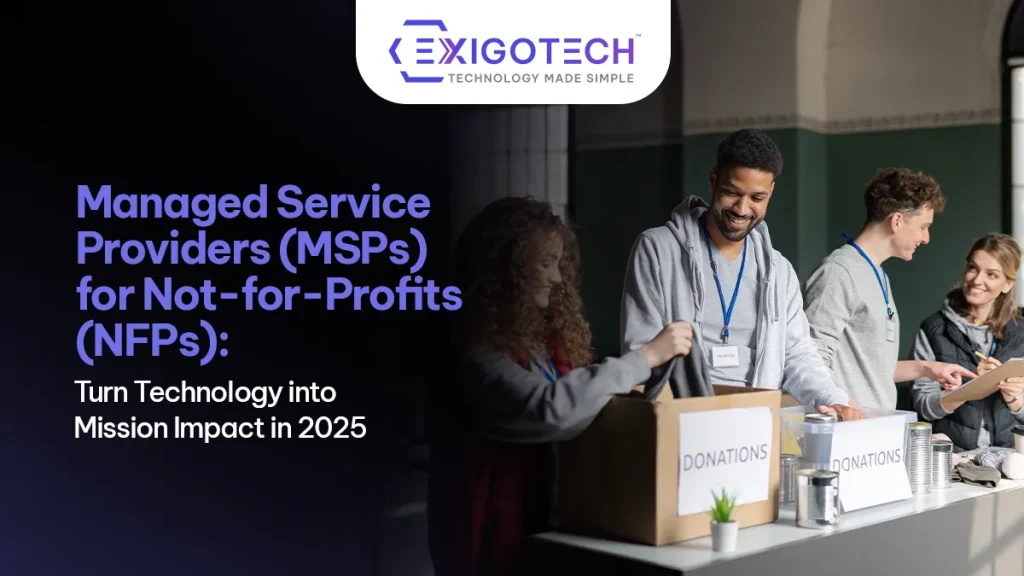
Managed Service Providers (MSPs) for Not-for-Profits (NFPs): Turn Technology into Mission Impact in 2026
 Niten Devalia
Chief Sales Officer / Co-founder • Sep 24, 2025 • 6 min read
Not-for-profit (NFP) organisations are built on purpose, not profit. Their mission is to serve communities, advocate for causes, and deliver programs that create impact. Yet, in 2026, every one of these goals relies on technology. From donor management systems and volunteer scheduling platforms to cloud collaboration and cybersecurity, IT has become the backbone of how NFPs operate.
The challenge? Most NFPs face resource constraints. Limited budgets, small IT teams, and the pressure to prove impact mean that technology often feels like a burden rather than an enabler.
We have spoken to NFP leaders who ask the same questions:
- How do we keep donor and beneficiary data secure without overspending?
- What happens when our small IT team can’t keep up with new platforms?
- How do we scale systems to serve more people without breaking our budget?
These aren’t hypothetical concerns; they are daily trade-offs for not-for-profits. And that’s exactly where Managed Service Providers (MSPs) play a role. MSPs don’t just reduce costs; they give NFPs the confidence to use technology strategically, so mission work isn’t slowed by IT limitations.
At Exigo Tech, we work with NFPs across community care, health, education, and social services. We have seen wins when the focus stays on three things: resilience, security, and simple, connected workflows.

How to Secure Microsoft Copilot Agents with Microsoft 365 E5
Why NFPs Need MSPs Right Now
1) Mission-critical Systems Can’t Afford Downtime
If your donation page fails during a campaign, revenue drops. If your EMR or case system stalls, care delays. The cost is not only IT time. It is missed meals, missed calls, missed care.
What good looks like: 24/7 monitoring, fast incident response, tested backups, and clear RTO/RPO targets.
Proof in the field: SEWA Rural increased productivity by ~30% after modernising core systems and workflows, which helped clinical and admin teams work faster and with fewer manual steps (read the case study).
2) Security is Trust
NFPs hold sensitive data: donor details, health records, vulnerable community information, etc. A single breach can break years of trust.
The common trap: “We are small, so we are safe.” Attackers do not care. They target weak links.
What to do: Apply least-privilege access, MFA, modern email security, device management, and continuous threat detection.
Proof in the field: Samaritans of Singapore (SOS) used an omnichannel service solution that supported better case handling across phone, email, and social channels – and reported an 8% reduction in suicide cases as part of a broader program upgrade (read the case study).
3) Compliance and Reporting Keep Growing
Privacy laws and funder rules demand clear controls and clean evidence. Boards ask for risk reports. Donors expect transparency.
What good looks like: Policy mapped to controls, logging, audit trails, and exportable evidence.
Payoff: Faster audits. Fewer last-minute scrambles. More time for programs.

Agentic AI for Operations Leaders: Turning AI into Action
4) Teams are Lean
Many NFPs rely on one IT generalist. That person cannot be a network engineer, cloud architect, security analyst, and BI developer at once.
What to do: Use an MSP to extend your team. You keep strategic control. We run the platform, watch the alerts, and close the tickets.
5) Digital Engagement is Now Core Fundraising
Donor experiences live in CRM, email journeys, and service touchpoints. If systems do not talk to each other, your outreach underperforms.
Proof in the field: St Agnes Catholic Parish lifted customer engagement by 15–25% with Dynamics 365 Sales and Customer Service, moving from siloed data to a single view of the supporter journey (read the case study).
Benefits NFPs Can Expect with the Right MSP
1. Predictable IT Spends
Subscription pricing replaces surprise break-fix bills. You see costs per month, per site, or per user. That helps with grants and board reporting.
2. Fewer Outages, Faster Recovery
Monitoring and patch cycles reduce incidents. If an incident hits, backups and DR plans cut recovery time.
3. Stronger Security Posture
Zero-trust access, MFA, email hygiene, and endpoint management block common attacks. 24/7 detection spots the rest.
4. Better Engagement and Service
When systems talk to each other, journeys improve. Teams stop chasing data and start serving people.
5. Scale without Chaos
You can add programs, pop-up sites, and partner integrations without re-architecting every time.
Proof in the field: Palmera reached a 99% food security outcome for vulnerable communities in Sri Lanka with data and workflow automation on Microsoft Power Platform, which helped teams act on timely, clean data (read the case study).
What to Ask an MSP Before You Choose
Use these questions in your vendor check:
- NFP fit: How do you handle donor systems, grants, and volunteer workflows? Can you map controls to privacy and funder rules?
- Security baseline: Do you enforce MFA, device compliance, and least-privilege by default? What is your strategy for phishing and ransomware?
- Uptime and recovery: What are your RTO/RPO targets? When did you last test restores?
- Evidence and reporting: Can you give audit-ready reports each quarter/month (as per your requirement)?
- Integration approach: How will you connect CRM, donation pages, email, and data tools?
- Change management: How do you train staff and volunteers? Do you provide simple guides and office-hours sessions?
- Transparent SLAs and pricing: What is included, what is extra, and how do you measure success?

Microsoft 365 Security for Healthcare Providers: Protecting Patient Data and Business Operations
How Exigo Tech Works with NFPs
We focus on small steps that land value fast, then build.
1) Baseline and quick wins
- Harden identity, email, endpoints.
- Close high-risk gaps first.
- Stabilise backups and test restores.
2) Connect core systems
- Sync CRM, donation pages, finance, and service tools.
- Remove double entry and stale lists.
- Add dashboards for leaders and boards.
3) Scale safely
- Add new programs and sites with templates.
- Automate manual tasks.
- Tune policies as teams and risks change.
Client impact at a glance
- SOS: Omnichannel service platform that supported better case handling and contributed to an 8% reduction in suicide cases as part of a broader program effort. (case study)
- Palmera: Power Platform solutions that enabled program tracking and helped achieve a 99% food security outcome in targeted communities. (case study)
- SEWA Rural: Infrastructure uplift that increased productivity by ~30% and improved healthcare delivery. (case study)
- Agnes Catholic Parish: 15–25% engagement lift using Dynamics 365 Sales and Customer Service. (case study)
[award_cards section_title=”Our Recognitions:”]
[getaward title=”Finalist” description=”Microsoft Partner of the Year 2024 (Nonprofit Industry)” id=”72703″]
[getaward title=”Finalist” description=”WSABE 2025 (two categories)” id=”89260″]
[getaward title=”Winner” description=”ARN Innovation Awards 2024 (Security Partner)” id=”78408″]
[getaward title=”Finalist” description=”Australian Cyber Awards 2025 (Cloud Service Provider)” id=”84693″]
[getaward title=”Microsoft Specialisations” description=”Azure Infra, Database Migration, Virtual Desktop, Cybersecurity” id=”83538″]
[/award_cards]
All these recognitions matter because they reflect repeatable delivery, not one-off wins.

Table of Contents
Tags
Related Articles
How Managed Application Services Improve Uptime and Reliability

IT Support SLA Best Practices: How to Build Effective Service Level Agreements
Benefits of Managed IT Services for SMBs: A Practical Guide

Let's Talk About Your IT Challenges
Book a free consultation with our experts today. We'll analyze your current infrastructure and provide actionable recommendations.